Executive Summary
The construction industry is grappling with an escalating wellbeing crisis. Despite advances in physical safety protocols, many construction workers continue to face significant challenges to their mental and emotional wellbeing. Long hours, intense physical labor, remote job site environments, and a persistent cultural stigma around mental health have all contributed to alarmingly high rates of stress, burnout, substance use, and suicide. Pietential—a science-backed Wellbeing Intelligence Platform—helps firms measure, analyze, and improve workforce wellbeing at scale, enabling leaders to act with precision and urgency.
The Context: Physical and Psychological Risk in Parallel
The construction industry has long been associated with high physical risk. With 1,056 occupational deaths in 2022 (BLS) and consistently ranking among the most dangerous sectors in the U.S., the hazards are well known. But beyond the scaffolding, trenches, and machinery lies another invisible threat: unchecked psychological stress. Construction workers are nearly four times more likely to die by suicide than the average U.S. worker (U.S. Department of Labor, 2021). Rates are even higher among men in midlife—the demographic most represented in the industry.
Geography compounds the problem. Many workers are assigned to rural or remote locations where access to mental health services is limited. In these areas, long travel times, lack of providers, and minimal community resources leave workers without meaningful support. Pietential provides a way to bridge this gap, offering immediate, location-independent access to wellbeing assessment and visibility for employers.
The Structural Roots of the Crisis
The wellbeing crisis in construction is not just personal, it’s systemic:
- Presenteeism Culture: Workers are often rewarded for showing up, not for how they’re doing.
- Job Insecurity: Many construction roles are subcontracted or short-term, creating anxiety about future income.
- Worksite Transience: Project-based employment leads to constant change, with little opportunity for community-building or psychological safety.
- Gaps in Support: Smaller subcontractors, who make up a substantial portion of the industry, may not have formal programs in place, while many workers enter projects already managing financial strain, family responsibilities, or prior substance use challenges, which can be exacerbated by the demands of the job.
The Data Tells a Story of Strain
- Mental Health Prevalence: 83 % of construction workers report having faced a mental health issue (nationalacademies.org).
- Professional Help Access: Fewer than 5 % of construction workers saw a mental health professional in the past year, compared with approximately 22 % of all U.S. adults (kffhealthnews.org).
- Suicide Rate (Male Workers): Male construction workers face a suicide rate of 56 per 100,000—significantly higher than the 32 per 100,000 average for all male U.S. workers (travelers.com).
- Suicide Risk (Industry Comparison): In 2021, the construction industry’s suicide rate was 46.1 per 100,000—2.4 times the overall industry rate of 19.5 per 100,000 (cpwr.com).
- Rural Disparity: Between 2000 and 2020, rural (non-metro) suicide rates increased by 46 %, compared to 27.3 % in metro areas (cdc.gov).
The Role of Employers and HR Leaders
HR professionals in construction are expected to address mental health, but most are under-equipped. Challenges such as dispersed teams, a diverse mix of subcontractors, and a lack of centralized wellbeing data make it hard to know what’s working and where interventions are needed. Without clear insight, efforts remain reactive and insufficient. Employers who embrace an “active caring” approach, proactively seeking and addressing wellbeing risks, can create safer, more resilient workforces.
Why Pietential Works
Pietential is not another wellness app. It is a cloud-based, browser-first, mobile-friendly, science-backed platform designed to measure holistic wellbeing at scale and drive systemic improvement. Its psychometrically validated framework ensures accuracy, while its implementation requires no integration, no downloads, and can be up and running in just 30 minutes.
What Pietential Delivers
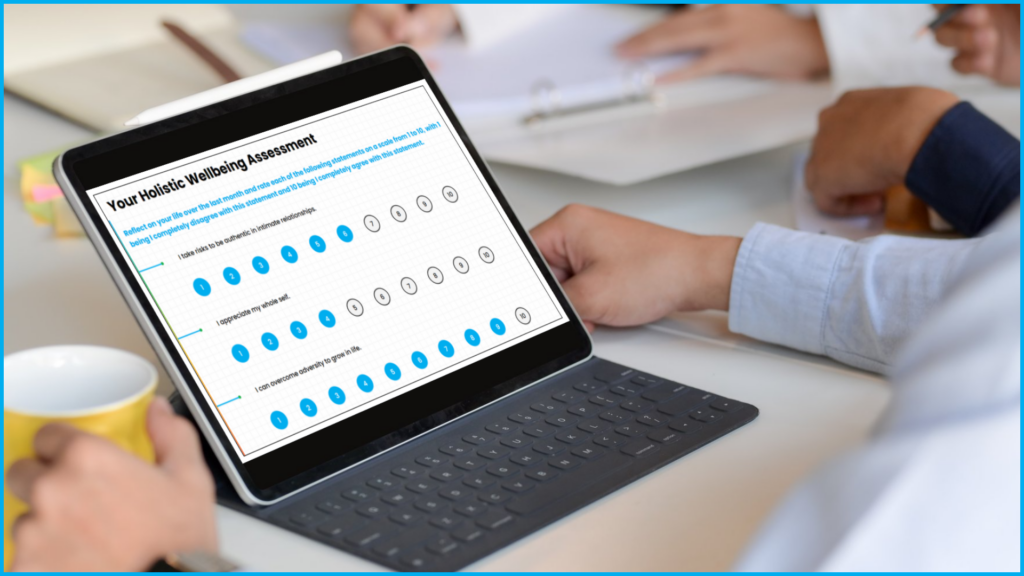
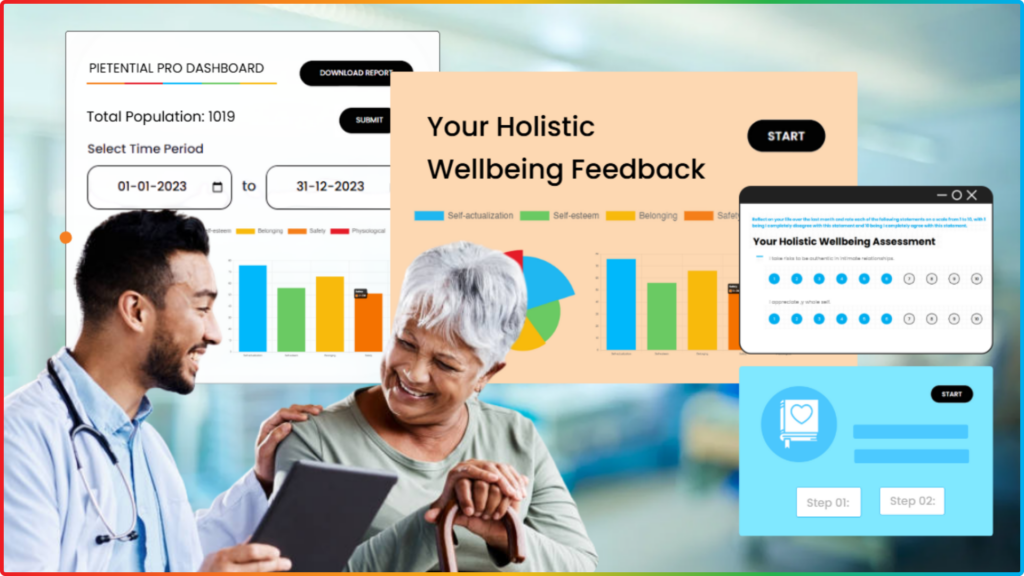
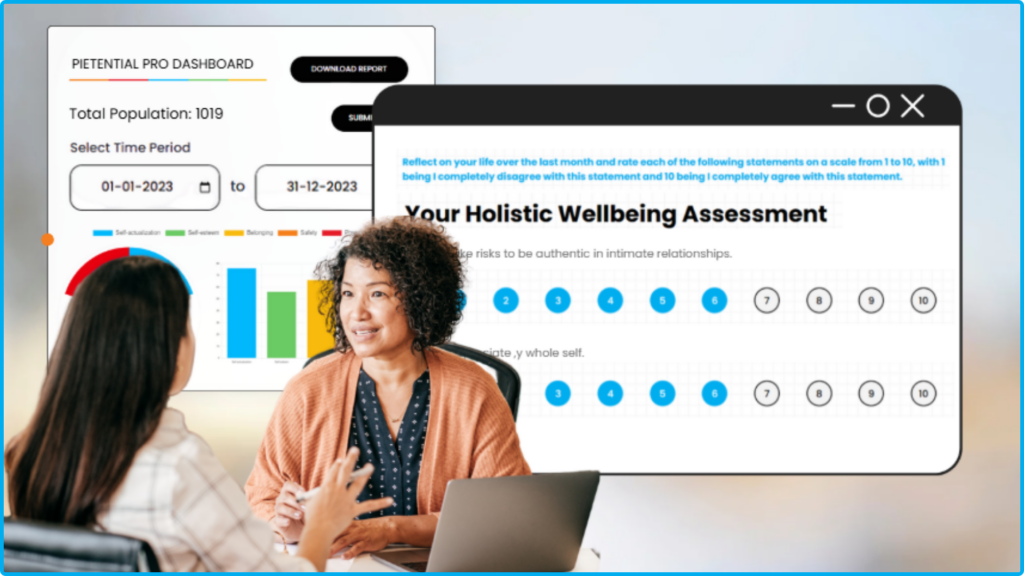
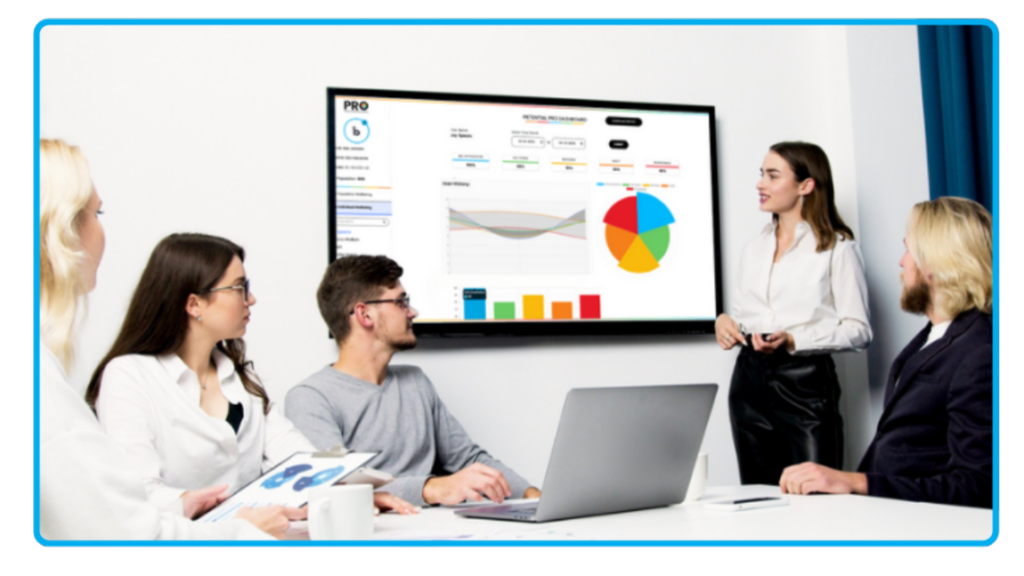
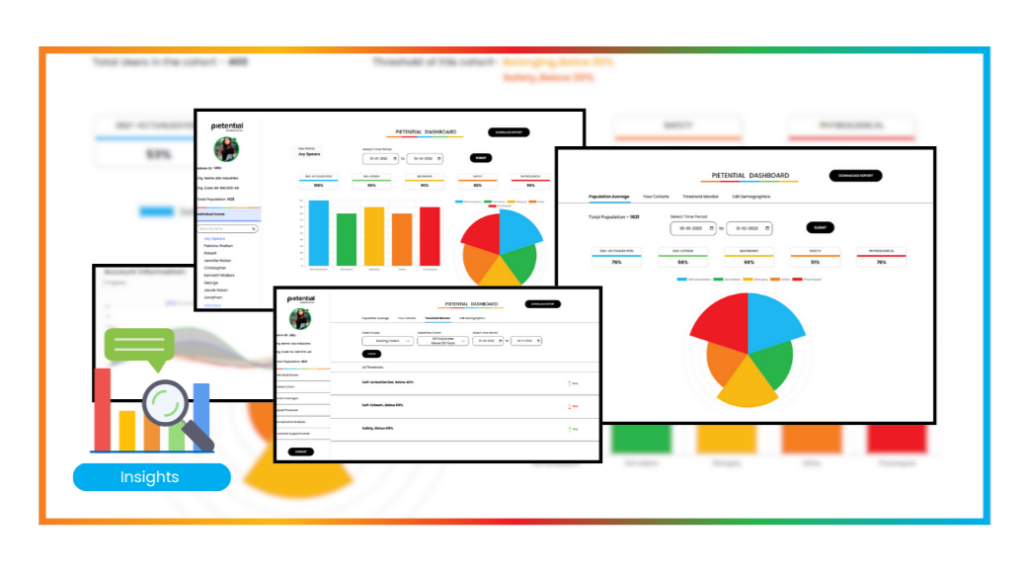
- Visual Wellbeing Assessments that map a worker’s position across five core domains rooted in Maslow’s Hierarchy of Needs. Workers access their assessment via a secure link on any device, with no app download required.
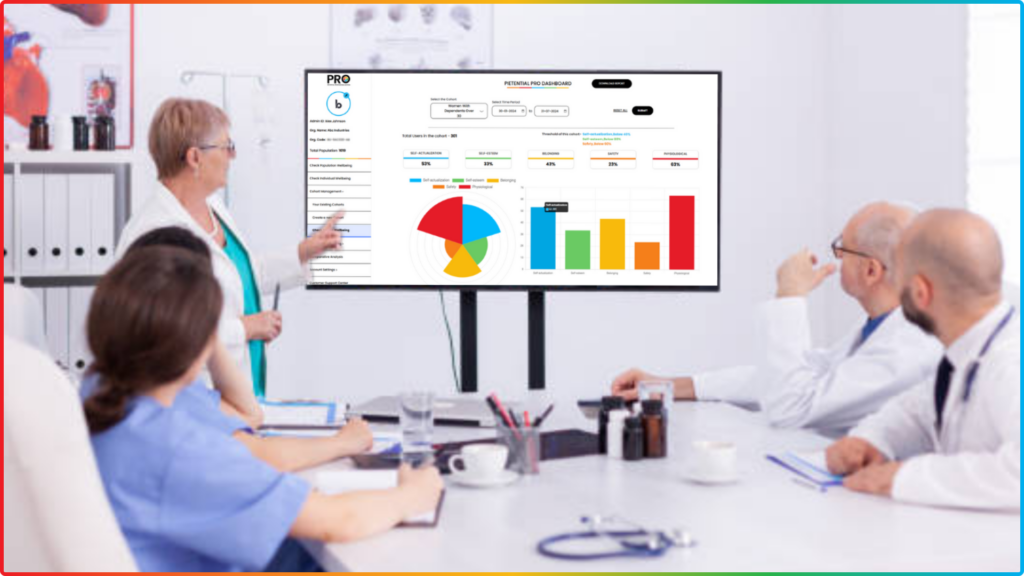
- Population-Level Monitoring to understand trends across large and small groups alike. Pietential can operate independently of existing HR/EHS systems or export data into them as needed.
- Cohort-Specific Insights—e.g., how do carpenters compare to welders? Are younger workers experiencing more burnout than their older peers?
- Anonymized and Aggregated Data unless a worker voluntarily chooses to share as a cry for help.
- Progress Monitoring Over Time to assess the impact of internal wellbeing initiatives.
- Immediate Implementation—no downloads, no integrations, just click-and-go access with setup based on data you already collect, such as age, role, location, and other demographics.
Use Case Examples
- Mid-Sized Commercial Contractor (1,200 employees): Pietential’s cohort analysis reveals that site supervisors are experiencing significantly more stress than other roles. With that insight, companies can launch targeted stress management training or adjust scheduling protocols to reduce pressure.
- Specialty Subcontractor (300 employees): Without a formal HR team or EAP, Pietential’s onboarding wizard rolls out a tailored wellbeing program in weeks. Burnout trends among welders are identified early and addressed proactively.
- National Infrastructure Firm: Baseline wellbeing across multiple, often remote job sites, visualizing wellbeing gaps and trends. This insight supports internal conversations on resource allocation and can be shared with investors or union leadership to demonstrate ROI on wellbeing investments.
Building a Culture of Visibility and Support
By removing the guesswork from wellbeing, Pietential empowers employers to act early, allocate resources wisely, and build trust across all levels of the workforce. In industries like construction—where physical safety is a given—psychological safety must follow. This proactive, “active caring” approach creates a culture where wellbeing is a shared responsibility and a competitive advantage.
Conclusion
From Hard Hat to Headspace
Construction has long prioritized physical safety; it’s time to elevate wellbeing with the same urgency. The crisis is measurable, the consequences are severe—but so is the opportunity to lead. Accessible from anywhere, on any device, Pietential enables forward-looking firms to protect lives, attract and retain talent, reduce costs, and outperform peers.
About Pietential

Pietential is the only psychometrically validated, science-backed wellbeing platform that helps organizations measure, understand, and elevate human potential. Rooted in Maslow’s framework, Pietential is designed for both individuals and the organizations that serve them. Its cloud-based, browser-first, mobile-friendly architecture ensures high adoption, even in dispersed or under-resourced teams. Onboarding takes just 30 minutes using a pre-assessment survey built from the demographic data companies already collect.
Learn more at www.pietential.com/