

“Measuring What Matters : A New Vision for Wellbeing in Education”
Introduction
School districts are more than centers of academic instruction; they are hubs where communities converge, grow, and learn. They carry the weight of ensuring that students, teachers, and staff can thrive academically, socially, and emotionally. Yet this mission has become increasingly complex. Rising rates of student mental health challenges, unprecedented teacher burnout, and community-wide crises such as natural disasters and school shootings threaten the stability of school systems.
Even with the best intentions, many districts lack the tools to systematically assess, monitor, and address these challenges. Without clear data, decisions are often based on intuition, leaving gaps in how resources are allocated and outcomes measured. Schools require a proactive, evidence-based system to
cultivate wellbeing in such a way as to build resilience and equanimity across their communities.
Pietential provides that system. Grounded in Maslow’s Hierarchy of Needs, Pietential is a science-backed platform designed to assess, benchmark, develop, and monitor and report on holistic wellbeing. By evaluating the interconnected domains of physiology, safety, belonging, esteem, and self- actualization, Pietential empowers districts to address disparities, recover from crises, and foster vibrant educational environments. This paper explores how Pietential aligns with the needs of today’s school districts and provides actionable insights to guide their path forward.

The Foundation of Wellbeing in Education
A focus on wellbeing deepens the transformative impact of education, enabling students and educators to thrive in environments that support their holistic growth. It acknowledges that learning, engagement, and achievement are deeply influenced by the emotional, physical, and social conditions in which they occur.
For Students:
When students feel secure, connected, and valued, they are more likely to participate fully in the educational process. Conversely, students facing unmet needs—such as food insecurity, feelings of isolation, or safety concerns—are at greater risk of disengagement, absenteeism, and lower academic performance.
For Teachers and Staff:
Educators are the bedrock of successful schools, yet they face immense pressures. Chronic stress and burnout lead to high attrition rates, disrupting continuity in classrooms and placing additional strain on remaining staff. Supporting their wellbeing is essential to fostering a stable, motivated, and innovative workforce.
For School and District Administrators:
Principals, superintendents, and their executive teams are responsible for aligning the immediate needs of their schools with long-term strategic goals. At the school level, principals play a pivotal role in fostering a positive climate and responding to the day-to-day needs of their students and staff. At the district level,
superintendents and their teams must ensure that resources are allocated equitably, programs are effective, and the wellbeing of their communities is prioritized. With access to actionable data, administrators can better understand the complexities of wellbeing and develop targeted strategies to support students and educators alike.
For Communities:
Schools reflect the health of the neighborhoods they serve. When schools prioritize wellbeing, they strengthen their surrounding communities, reducing disparities and promoting collective growth.
Yet wellbeing is a nuanced, dynamic concept. Its interconnected dimensions mean that a deficit in one area—such as safety—can cascade into others, undermining belonging, esteem, and even physical health. Addressing this complexity requires a framework as comprehensive as the challenges themselves.
The Pietential Framework: Measuring What Matters
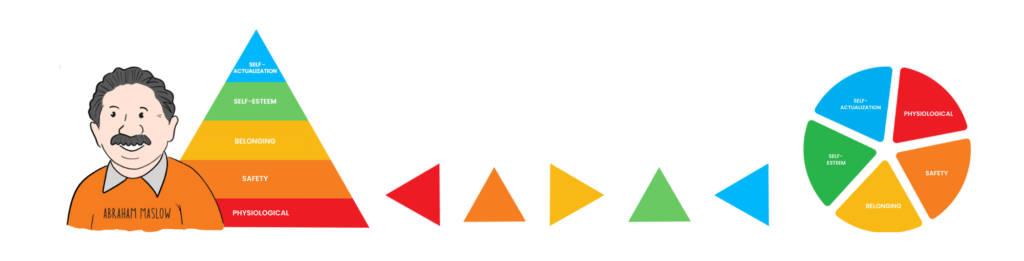
Pietential is grounded in Maslow’s Hierarchy of Needs, an enduring model for understanding human motivation. This framework enables Pietential to measure, organize and distill data on wellbeing holistically across five domain:

Physiology:
Addresses basic needs such as nutrition, sleep, and physical health.

Safety:
Encompasses physical security and psychological safety, foundational to trust and focus.

Belonging:
Reflects connections to peers, mentors, and the broader community.

Self-Esteem:
Involves self-confidence and recognition from others.

Self-Actualization:
Represents the pursuit of personal potential and purpose.
By capturing data across these domains, Pietential provides a nuanced picture of wellbeing, revealing patterns and areas that may require intervention.
A Use Case: Navigating Crisis Recovery
Imagine a school district grappling with the aftermath of a tragic school shooting. In such a scenario, administrators face the dual challenge of addressing immediate needs and supporting long-term recovery. Pietential offers a systematic approach to this complex process:
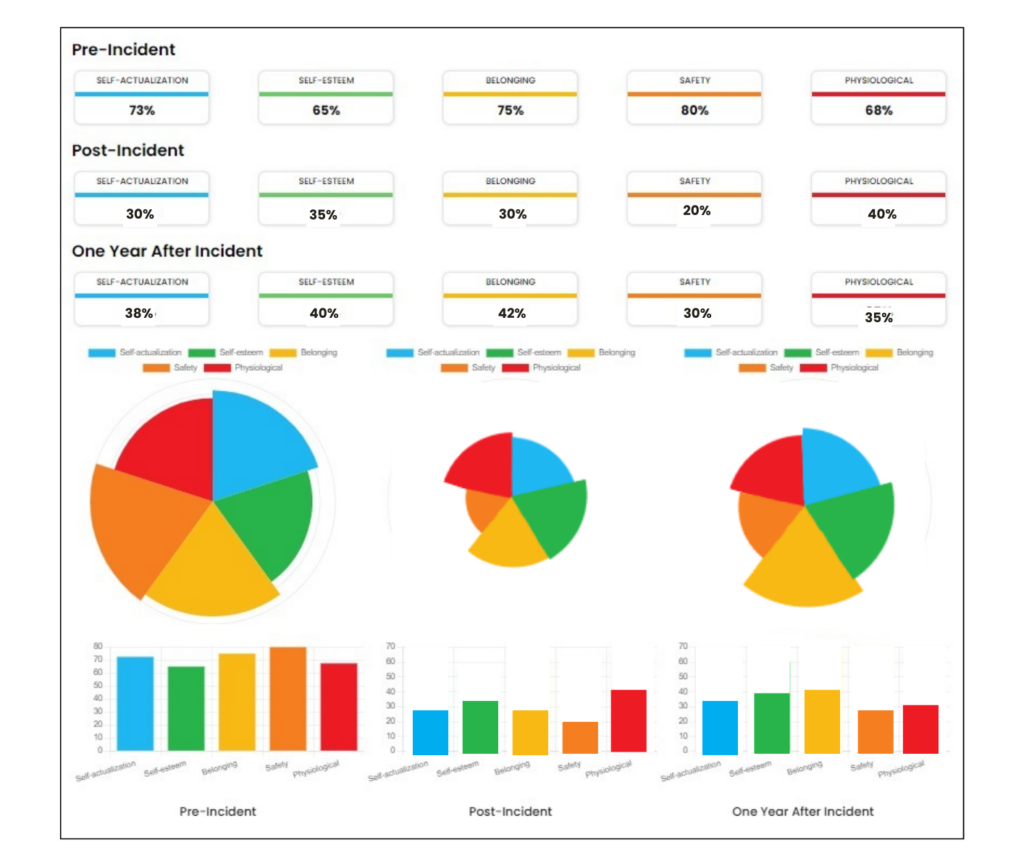
- Pre-Incident Benchmarking: Establishes a baseline of wellbeing across the district, capturing data on safety, belonging, and other domains.
- Post-Incident Assessments: Tracks shifts in wellbeing after the crisis, highlighting areas most affected, such as safety and belonging.
- Targeted Interventions: Identifies where counseling, safety measures, or community-building programs are needed most.
- Monitoring Recovery Over Time: Provides continuous data to measure progress, ensuring that recovery efforts remain effective and adaptive.
For administrators, this information is critical not only for guiding recovery but also for understanding when academic performance—often impacted by trauma—can be expected to return to pre-incident levels.
Key Features of Pietential
Pietential’s strength lies in its ability to translate complexity into clarity, offering actionable tools that integrate seamlessly into school systems:
- Comprehensive Assessments: Quickly evaluates wellbeing across the five MHN domains, capturing insights at individual, demographic cohort, school and district-wide levels.
- Real-Time Data Visualization: Transforms raw data into intuitive dashboards with charts, trend lines, and comparisons to guide decision-making.
- Customizable Demographics: Allows districts to create tailored cohorts (e.g., students receiving free/reduced lunch, teachers by grade level) for deeper analysis and comparison, which inform resource allocation.
- Proactive Alerts: Notifies administrators of declines in wellbeing, enabling timely interventions.

“Schools often struggle to answer critical questions about wellbeing. Pietential
gives them the tools to not only measure it but act on what matters most.”
– John Starling, founder and former educator
The Implementation Journey
Pietential is designed to integrate seamlessly into the unique workflows of school districts. From onboarding to ongoing support, the platform prioritizes simplicity, efficiency, and collaboration:
- Onboarding: Pietential’s team works closely with district administrators to set up the platform, define key cohorts, and establish initial benchmarks.
- Training: Comprehensive training ensures that educators and administrators understand how to interpret and apply Pietential’s insights.
- Ongoing Support: Dedicated support teams assist with troubleshooting, updates, and optimization to ensure long-term success.
By emphasizing ease of use and robust support, Pietential empowers districts to focus on outcomes rather than processes.
Building a Vision for Equitable and Thriving Schools
Wellbeing is not a static goal but a continuous process of growth, resilience, and adaptation. Pietential aligns with this vision, helping districts identify and address disparities, respond to crises, and foster a culture where students and staff can achieve their full potential.
Consider the Long-Term Benefits:
- Improved Academic Outcomes: When students feel supported, grades and engagement naturally follow, creating a thriving learning environment.
- Stronger Teacher Retention: Supporting educators’ wellbeing reduces turnover, decreases burnout, and builds institutional stability.
- Empowered Administrators: Providing tools to monitor and enhance wellbeing equips administrators with actionable insights, enabling better resource allocation and fostering a supportive school culture.
- Community Trust: By demonstrating a commitment to holistic wellbeing, districts strengthen relationships with families, staff, and other stakeholders, enhancing community confidence in the school system.
Pietential does not merely measure wellbeing—it provides a roadmap for action, enabling districts to transform insights into meaningful change.
Conclusion
School districts are the heart of their communities, entrusted with the profound responsibility of shaping lives. Yet fulfilling this mission requires more than traditional metrics and reactive strategies. It demands a holistic, proactive approach to wellbeing, one that addresses the interconnected
needs of students, teachers, and staff.
Pietential offers districts a path forward. By providing clear, actionable insights into the dimensions of wellbeing, it empowers educators to foster resilience, equity, and excellence. Whether guiding recovery after a crisis or addressing long-standing disparities, Pietential helps districts measure what
matters most and act on it with confidence.
For districts ready to lead the way in wellbeing, Pietential is more than a tool—it’s a partner in progress.